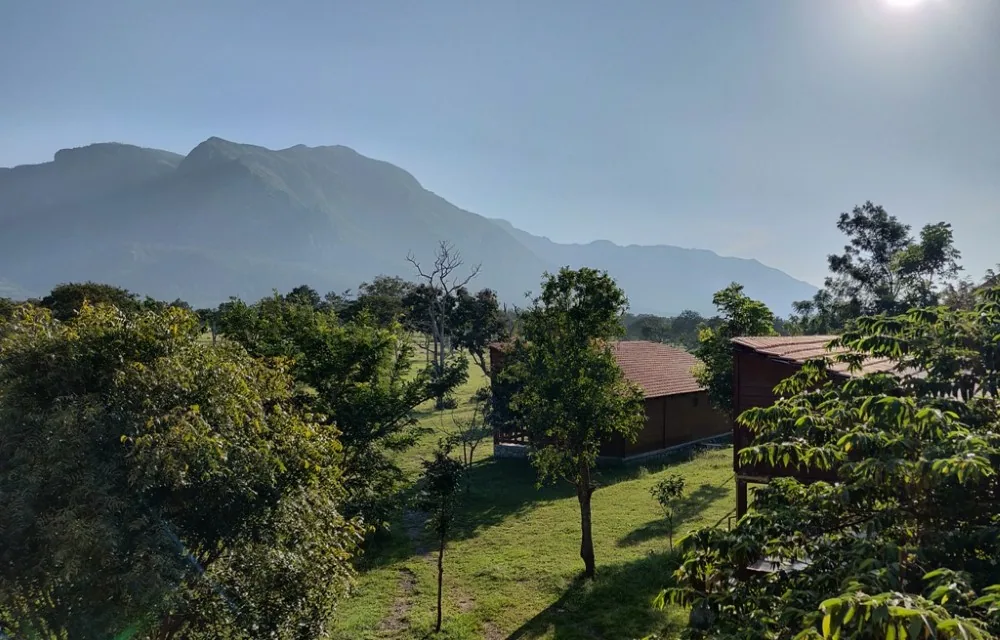
Ask anyone who has spent a morning in Mudumalai what they saw, and the answer is rarely the same twice. That is the joy of it. Mudumalai wildlife ranges from herds of chital on the grassland to elephants moving along the river, langurs crashing through the canopy and more than 260 species of birds. This guide sets out what you may realistically see on a safari, how likely each sighting is, and how to enjoy it in a way that keeps the animals — and you — safe.
- Likely: Asian elephant, chital, sambar, gaur, grey langur, wild boar, peafowl and many other birds.
- Now and then: Malabar giant squirrel, dhole and sloth bear.
- Rare: tiger and leopard. Both live here; neither can be promised.
- Best hours: early morning and late afternoon. Safari timings are set by the forest department, so check them close to your dates.
Mudumalai Wildlife at a Glance
Mudumalai sits in the Nilgiris district of Tamil Nadu, where the state meets Karnataka and Kerala. It was established as a wildlife sanctuary in 1940 and declared a tiger reserve in 2007, with a core area of about 321 km² and a buffer of roughly 368 km². To the north it adjoins Bandipur, to the west Wayanad, and the whole reserve lies within the Nilgiri Biosphere Reserve.
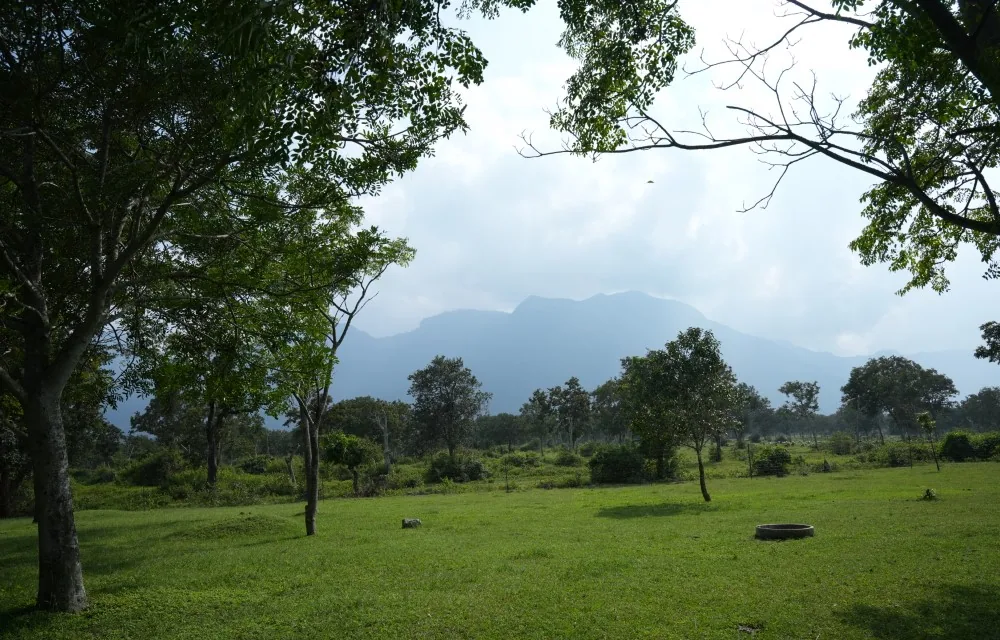
That continuity matters. Mudumalai is not an island of forest but part of one of the largest connected wildlife landscapes in southern India, and animals move freely across it. The habitat also changes quickly — dry thorn and scrub towards the Moyar river, deciduous forest with teak and bamboo through the middle, and wetter forest to the west — which is why such a wide range of animals and birds can be found in a relatively small area.
How Likely Is Each Sighting?
The table below reflects what guests ordinarily experience across seasons. It is a guide, not a promise: weather, water, time of day and plain luck all play their part.
| Animal | Likelihood | Where to look |
|---|---|---|
| Asian elephant | Common | Grassland edges, river courses, sometimes the roadside |
| Chital (spotted deer) | Common | Open ground almost anywhere, usually in herds |
| Gaur (Indian bison) | Common | Grassland edges at first and last light |
| Sambar | Common | Wooded areas and near water toward dusk |
| Grey langur | Common | In the canopy along forest roads |
| Wild boar | Common | Crossing tracks, especially early |
| Malabar giant squirrel | Occasional | High in the canopy of taller trees |
| Dhole (Indian wild dog) | Occasional | Forest roads, mostly early in the morning |
| Sloth bear | Occasional | Scrub and around termite mounds |
| Leopard | Rare | Anywhere, but seldom seen |
| Tiger | Rare | Anywhere, but seldom seen |
The Mammals You Are Most Likely to See
Asian Elephant
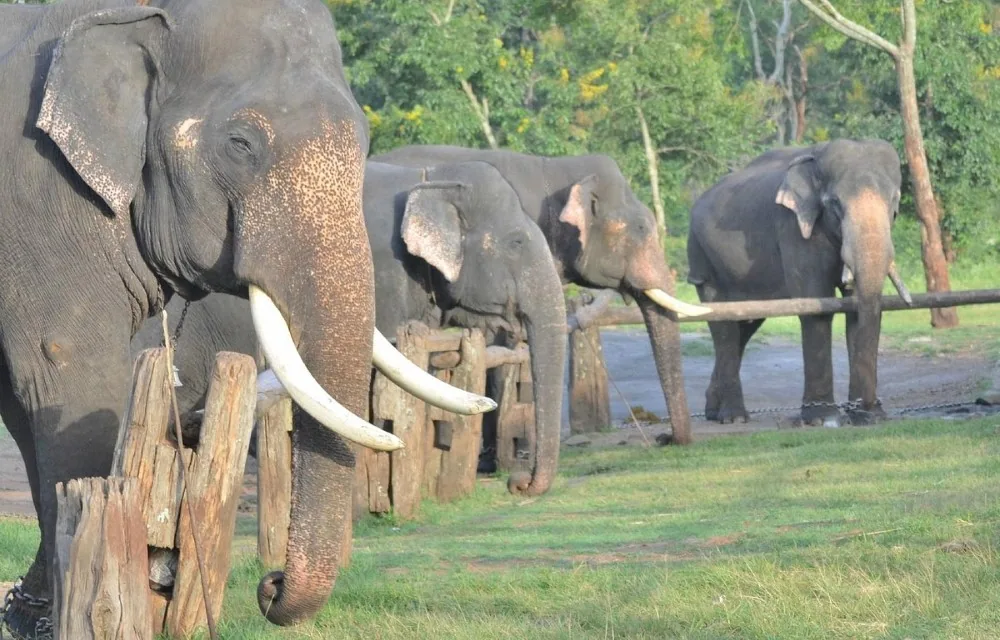
The animal this landscape is organised around. Elephants are seen on many safaris, more often in some seasons than others, as they follow water and fresh grazing. Watch for family groups with young calves near the river courses and along grassland edges, and give them a wide berth — a calm elephant is one that does not feel crowded.
Chital and Sambar
Chital, or spotted deer, are the most familiar sight in Mudumalai, grazing in herds on open ground. Listen for their sharp alarm call: it often means a predator is moving nearby. Sambar are larger, darker and more often alone, and are usually seen in wooded areas or near water as the light fades.
Gaur
The gaur, or Indian bison, is the largest species of wild cattle in the world, and seeing a full-grown bull at close range is something people remember. Look for them along grassland edges early and late in the day.
Grey Langur, Bonnet Macaque and Wild Boar
Grey langurs are common in the canopy along forest roads, and their warning calls are worth paying attention to. Bonnet macaques are often seen too. Wild boar families cross the tracks at dawn, usually at speed.
Worth Watching For
These turn up often enough to keep your eyes open, and any one of them makes for a very good morning:
- Malabar giant squirrel — rust and cream, high in the canopy. When you hear branches move overhead, look up.
- Dhole (Indian wild dog) — pack hunters, most often seen on forest roads early in the morning. A genuinely good sighting.
- Sloth bear — usually a brief view as one heads into scrub. Termite mounds are worth watching.
- Barking deer, mongooses and jungle cat — all recorded in the reserve, though they are shy and sightings are irregular.
Tiger and Leopard: The Honest Picture
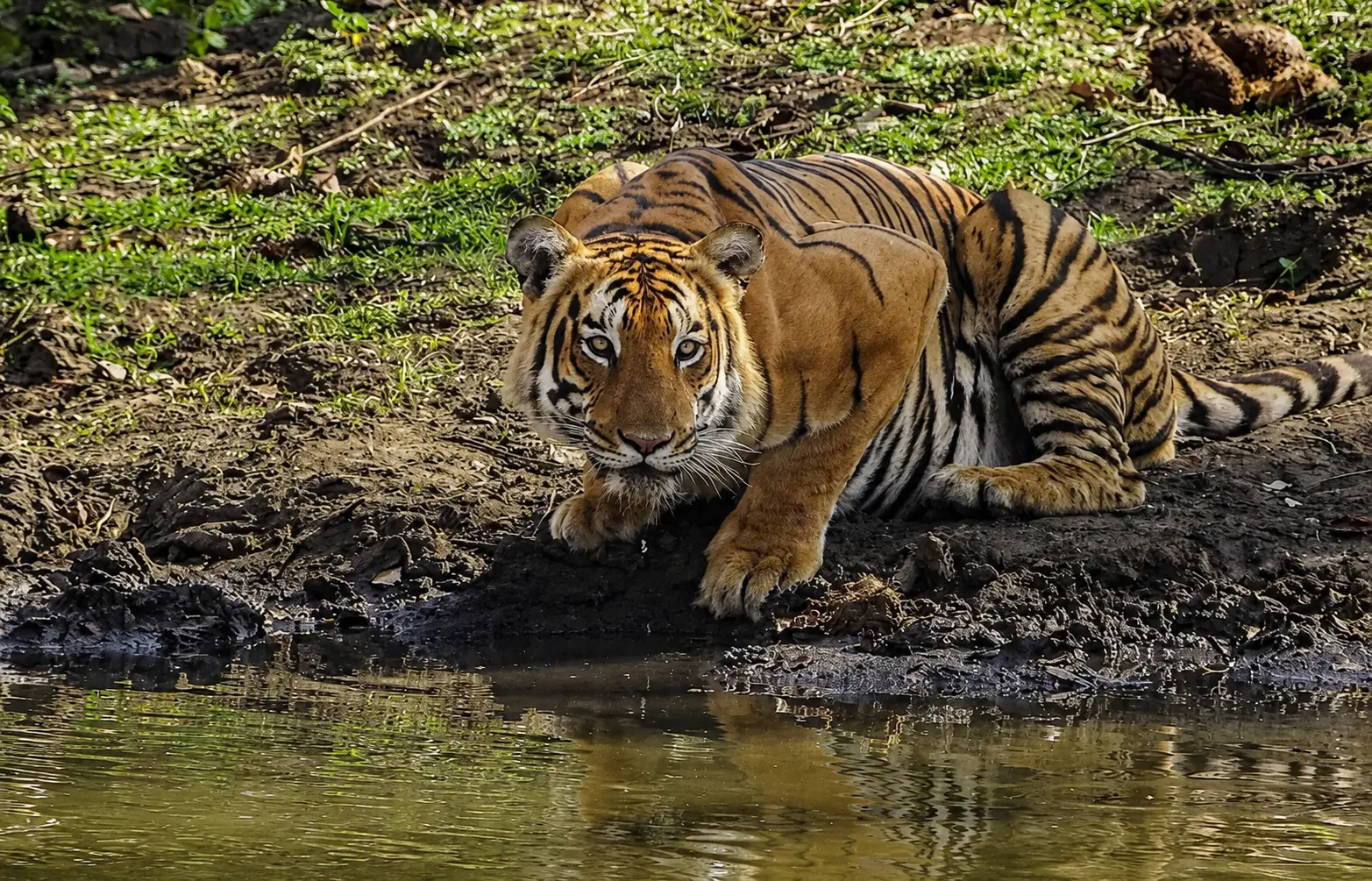
Mudumalai is a tiger reserve, and tigers do live here, alongside leopards. But both are secretive, and most safaris will not see either. We would much rather tell you that now than have you measure the morning against a tiger. Enjoy the whole forest — the elephants, the deer, the birds, the alarm calls that tell you something is moving out of sight — and if a big cat does step out, it will be the story you tell for years.
One animal you will not see around Masinagudi is the Nilgiri tahr. It lives in the high-altitude grasslands of the upper Nilgiris, well above the foothills.
Birds of Mudumalai
Published records list at least 266 bird species in Mudumalai, and you do not have to be a dedicated birder to enjoy them. Indian peafowl and grey junglefowl are common along road edges at first light. Look for the electric blue of an Indian roller in flight, green bee-eaters on bare branches over open ground, and racket-tailed drongos — superb mimics that copy the calls around them. White-cheeked barbets are heard far more often than they are seen, and crested serpent eagles circle and call over the valleys through the day.
Mudumalai, the neighbouring Sigur plateau and the Moyar valley are also among the most important remaining places in southern India for vultures. A survey published in the Journal of Threatened Taxa recorded four species in the Moyar valley — the white-rumped, Indian, red-headed and Egyptian vultures, all threatened. Seeing one is never guaranteed, but it is worth scanning the sky over open country.
For more on where and when to look, see our guide to bird watching in Masinagudi.
Reptiles Along the Water
Mugger crocodiles live in the rivers and larger pools, and Indian rock pythons are also recorded in the reserve. Both are seen far less often than the mammals, but a mugger basking on a riverbank is worth a pause if you pass one.
How to Improve Your Chances of a Sighting
- Go early or late. The first and last hours of daylight are when animals are most active. The middle of the day is warm and quiet.
- Think about the season. In the drier months, animals tend to gather near the water that remains. After the rains, the forest is green and dense, which can make animals harder to spot. Our article on the best time to visit Masinagudi goes season by season.
- Be patient and quiet. Animals settle around quiet vehicles and move away from noisy ones.
- Bring binoculars. Neutral-coloured clothing, a hat, water and a warm layer for a cool start help too. Our photography guide covers light and timing.
- Do more than one safari. Every outing is different, and two give you a much better feel for the forest than one.
Safaris in Mudumalai are run by the forest department, not by resorts. Timings, entry points, booking arrangements and vehicle numbers are set by them and change through the year. Our practical guide to Mudumalai safari explains how it generally works, and our wildlife safari page covers Mudumalai and Bandipur together.
Watching Wildlife Responsibly
A few simple courtesies protect the animals, keep everyone safe and, as it happens, lead to better sightings:
- Stay seated in the vehicle, keep voices low and follow every instruction from forest staff and drivers.
- Never feed wild animals. An animal that learns to approach people for food usually comes to harm.
- Keep a respectful distance, especially from elephants with calves, and do not ask the driver to move closer.
- Turn off the flash and leave drones at home.
- Single-use plastics are banned across the Nilgiris, so carry a reusable bottle and take everything back out with you.
- On the highway through the reserve, please do not stop or step out of your vehicle to photograph animals. The highway also closes to traffic overnight to let wildlife move freely — our travel information page explains how to plan around it.
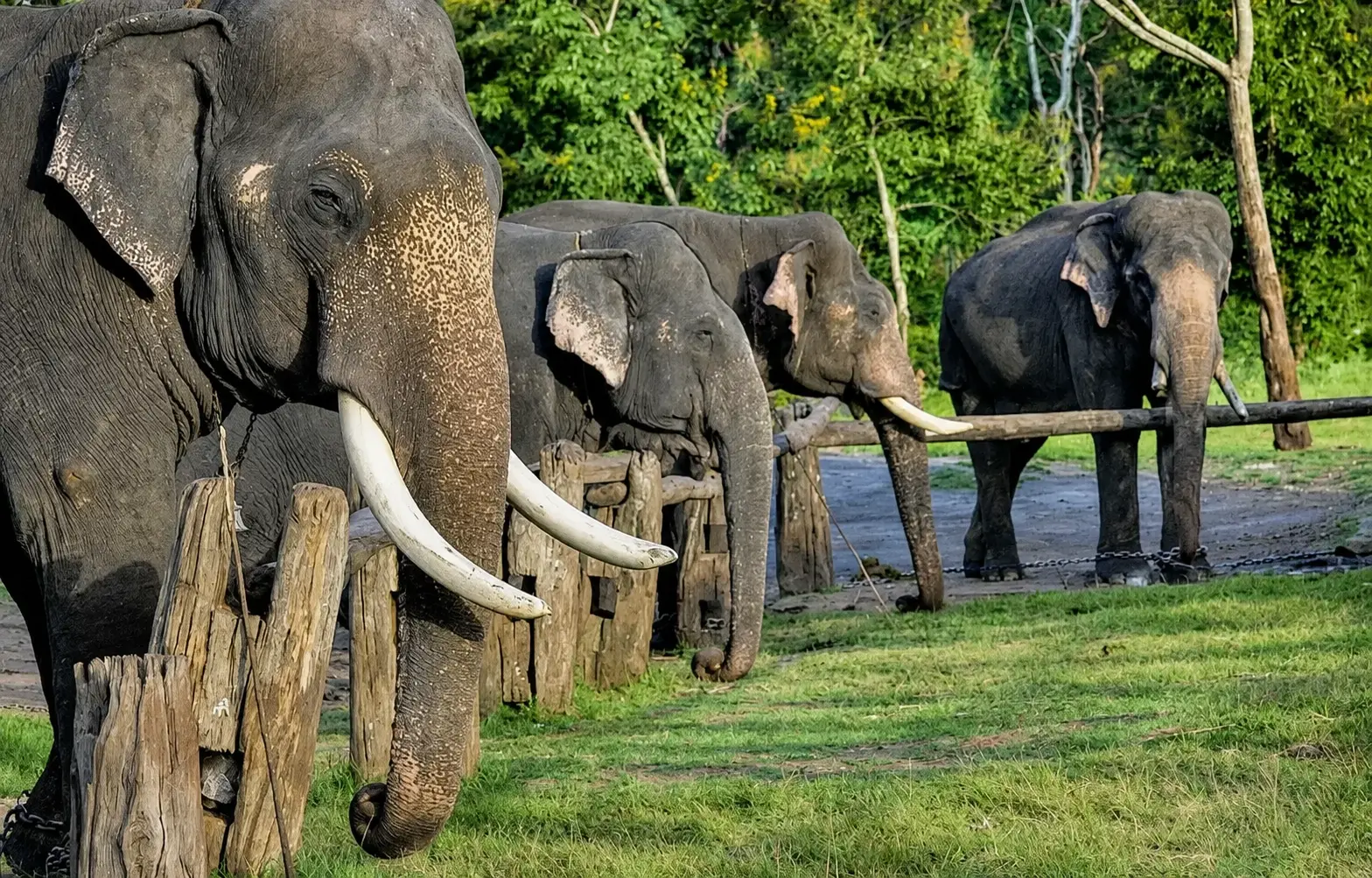
- Remember that the elephants at the Theppakadu elephant camp are cared-for camp elephants. Wild elephants should only ever be watched from a distance.
Share Your Sightings
If you photograph Mudumalai wildlife on your safari, we would love to see it — share it with #mudumalaiwildlife and tag @avenue_tree on Instagram. One request: please do not share exact locations for sensitive animals such as big cats or nesting birds. Simply saying “Mudumalai” is plenty.
Where to Stay for a Mudumalai Safari

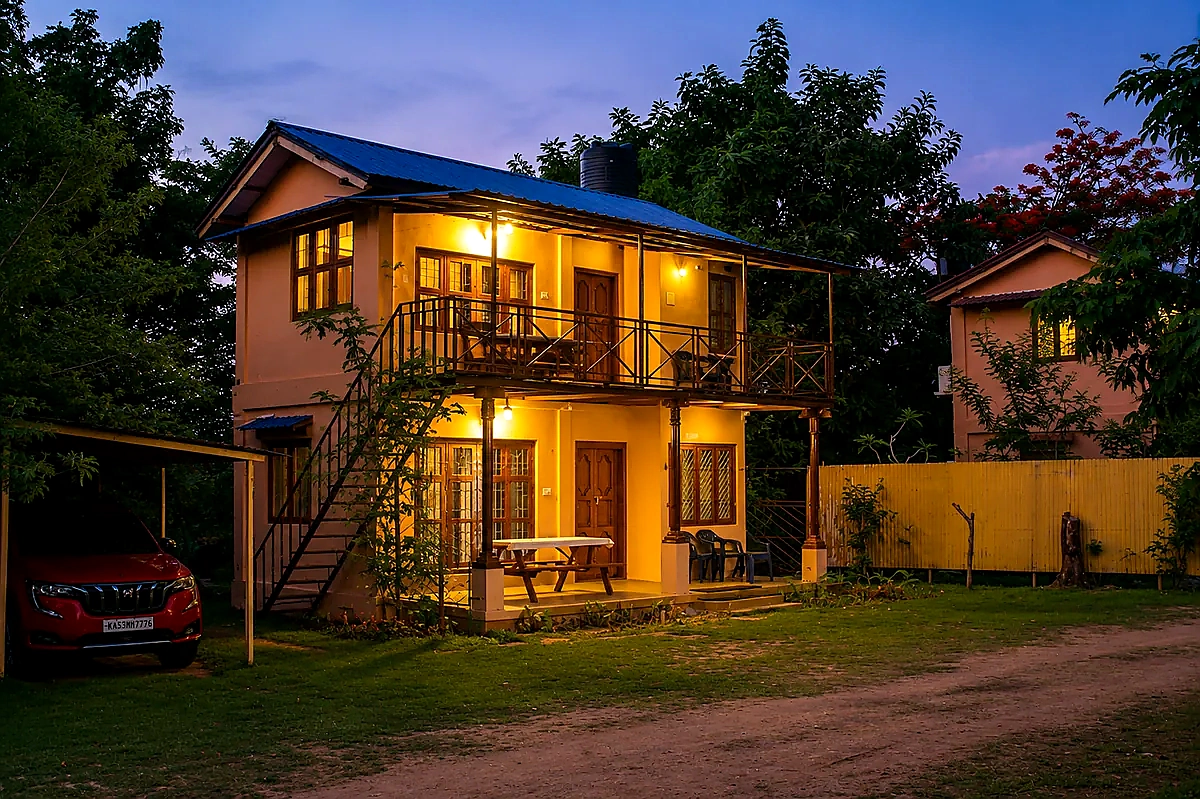
Masinagudi sits on the edge of the reserve, which makes it a convenient base for early starts. Labdhi Resorts is our wildlife-facing property here: timber Deluxe Rooms and Superior King Rooms with Loft, a vegetarian restaurant that cooks to order, and breakfast that can be timed around your safari if you let us know the night before. Our team will talk you through the current safari timings and make sure you leave in good time.
AranyaSun, our second property in Masinagudi, is a smaller garden stay with views of the Nilgiri range, and it welcomes pets. For more on staying close to the forest, see our page on a nature stay near Mudumalai.
Frequently Asked Questions
What Animals Can You See in Mudumalai?
Asian elephant, chital (spotted deer), sambar, gaur, grey langur and wild boar are the animals visitors see most often. Malabar giant squirrel, dhole and sloth bear turn up occasionally, while tiger and leopard are present but rarely seen. The reserve also records more than 260 bird species. Sightings are never guaranteed.
Will I See a Tiger on a Mudumalai Safari?
Possibly, but do not plan on it. Mudumalai is a tiger reserve and tigers live here, yet sightings are uncommon. Plan your trip around the wider wildlife and treat a big cat as a piece of luck.
What Is the Best Time of Day to See Wildlife in Mudumalai?
Early morning and late afternoon, when animals are most active and the light is soft. The middle of the day is usually warm and quiet. Safari departure times are set by the forest department and change with the season, so check them close to your travel date.
How Many Bird Species Are Found in Mudumalai?
Published sources record at least 266 bird species in Mudumalai, including peafowl, junglefowl, hornbills, bee-eaters, eagles and several threatened vultures in the Moyar valley area.
Can I See Wild Elephants Outside a Safari?
Elephants move through the wider landscape and are sometimes seen from the roads around Masinagudi. If you meet one, stay in your vehicle, keep your distance, do not stop to photograph it on the highway and never try to feed it.
Where Should I Stay for a Mudumalai Safari?
Masinagudi, on the edge of the reserve, is a convenient base. Avenue Tree's Labdhi Resorts and AranyaSun are both in Masinagudi, and our team will help you check the current safari timings and leave in good time.
Plan Your Wildlife Break
Tell us your dates and where you are travelling from, and we will suggest the property and room that suits you — and check the current safari position for you before you set off.